01Start with one sentence
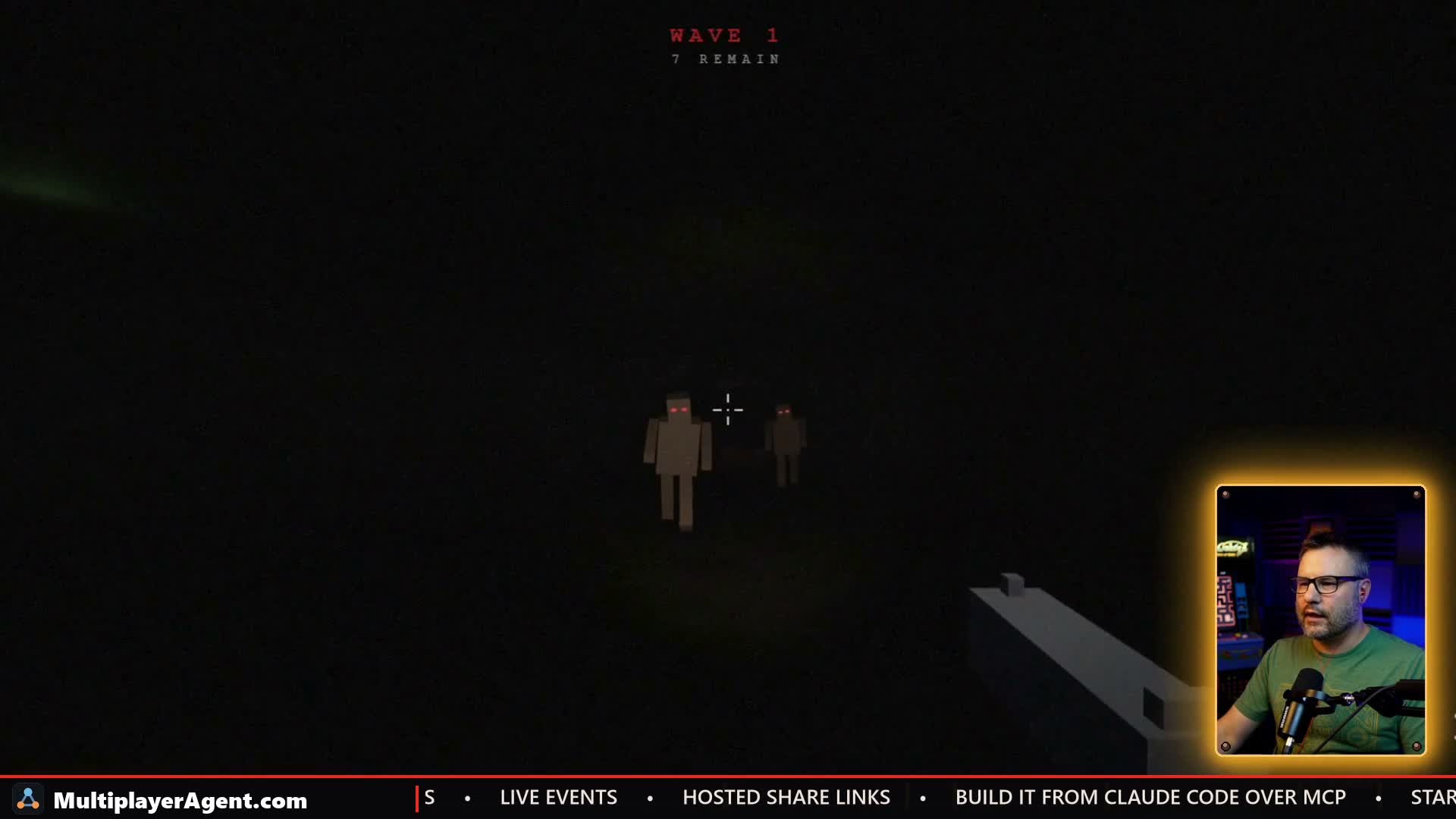
Nate opens Claude Code in VS Code on a new project called Dread FPS and types one sentence: make me a first person shooter. He thinks of a build like a sculptor's block. You chisel toward the game you want, and you have to guide the AI to get there.
About 15 minutes later it's done, and it guessed. It assumed he wanted a horror FPS and named it Dread. Not the plan, but the name stuck.
First play: the screen flickers, there's film grain, and it's a wave based shooter. Space to run, a reload key, unlimited ammo, blocky creatures that lift their hands and come after you, and a big stage with a horror backrooms feel. Some enemies drop pickups, and there's a health pickup. Nate's note: those guys are fast.
That's the MVP. It's playable and it works, and from here you decide what it becomes. He floats tower defense with bigger bosses and no ceiling, then goes another way.
Make me a first person shooter.02Switch it to 90s Doom
The curveball: switch the game to an old school FPS like Doom or Quake, with sprite based graphics that are always billboarded at the player. Billboarding is the old term for a flat sprite that always turns to face you, which is how the 90s faked 3D.
Why throw out working 3D? He wanted it old school, you can always go back to 3D, and a 3D shooter isn't that original right now. It was a big change and it took a while, but Claude Code came back with a breakdown of everything it changed: different enemies, weapons, all of it.
In play it's Doom-ish, almost Wolfenstein, with the same sounds as before and an explosion effect. The graphics are placeholders, there to get something on screen. Hold the mouse button for rapid fire. There's no reload now, Doom style: you keep shooting until you're out, and downed enemies drop ammo.
Switch the game to more of an old school FPS like Doom or Quake: sprite based graphics, always billboarded at the player.The prompt as Nate describes it in the video.
03Real art, and a deathmatch
The placeholder sprites looked fine, but the next pass is the art. Nate uses ChatGPT image generation through Codex to make the images better. That needs a ChatGPT account. He's on an ordinary paid plan and says it has been enough for the art in his games.
The brief: art inspired by Quake, Blood and Doom, the boomer shooters of the 90s. Mostly set outside, with some indoor areas and buildings for the levels. Maps referenced from what's online. And turn it into a deathmatch, 15 frags to win.
Claude Code came back with questions. How should bots work, and does he want online play right away? Not yet: AI bots now, Multiplayer Agent later. And the Doom, Quake and Blood map files are copyrighted. Right: the maps are inspired by them and tweaked from there, and the graphics are its own. Nate admits he's driving the AI a little crazy with all the changes.
A play.bat file opens the game and runs a small server for it. The new art is super chunky, super gross, super terrible, and he loves it. Five bots, first to 15 frags. There's a super shotgun with a reload animation, an axe, retro armor, deathmatch pickups, and levels he thinks it did a great job on. Two problems show up in play: some animations need work, and there are statues that look like something you're supposed to shoot.
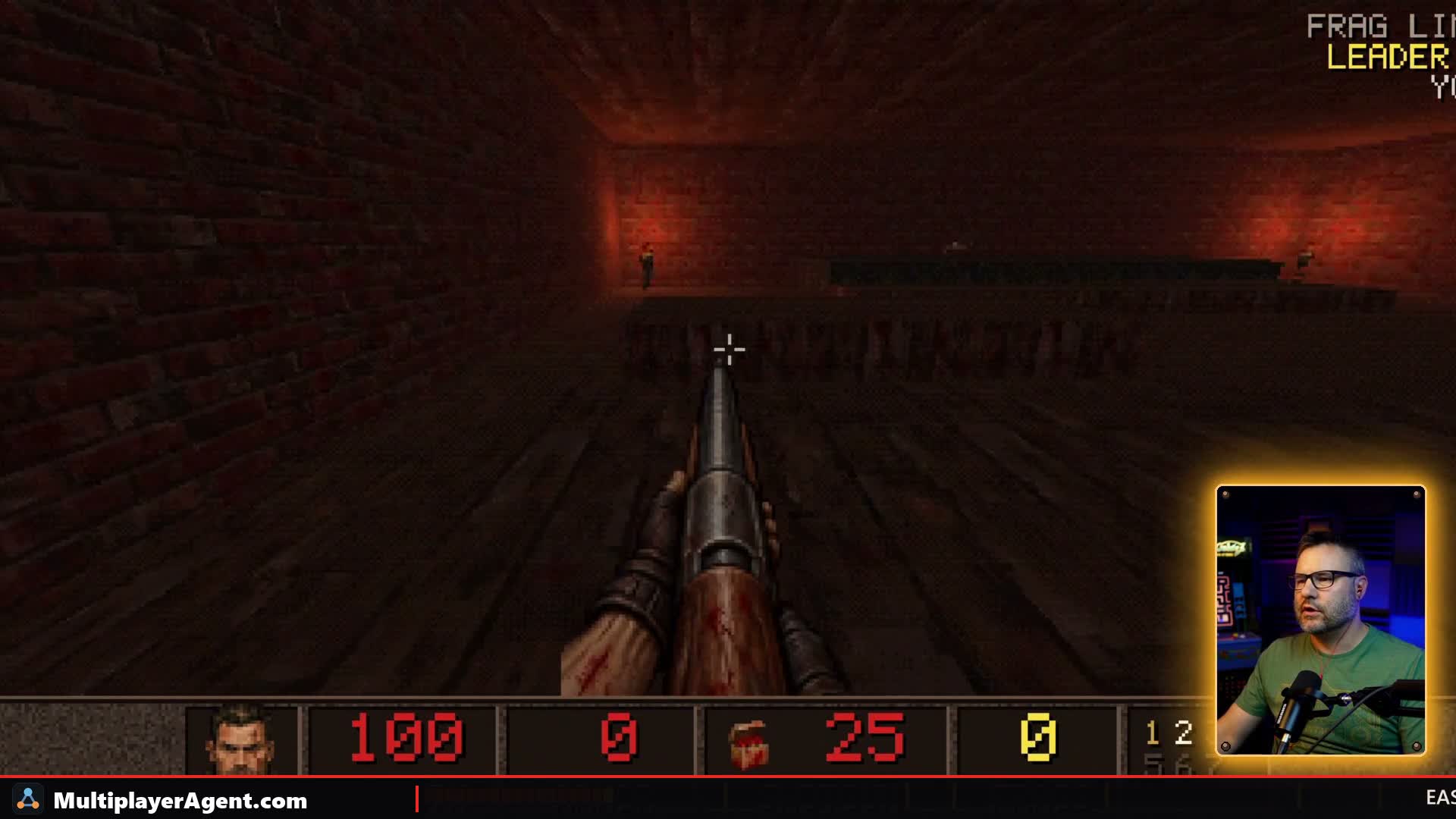
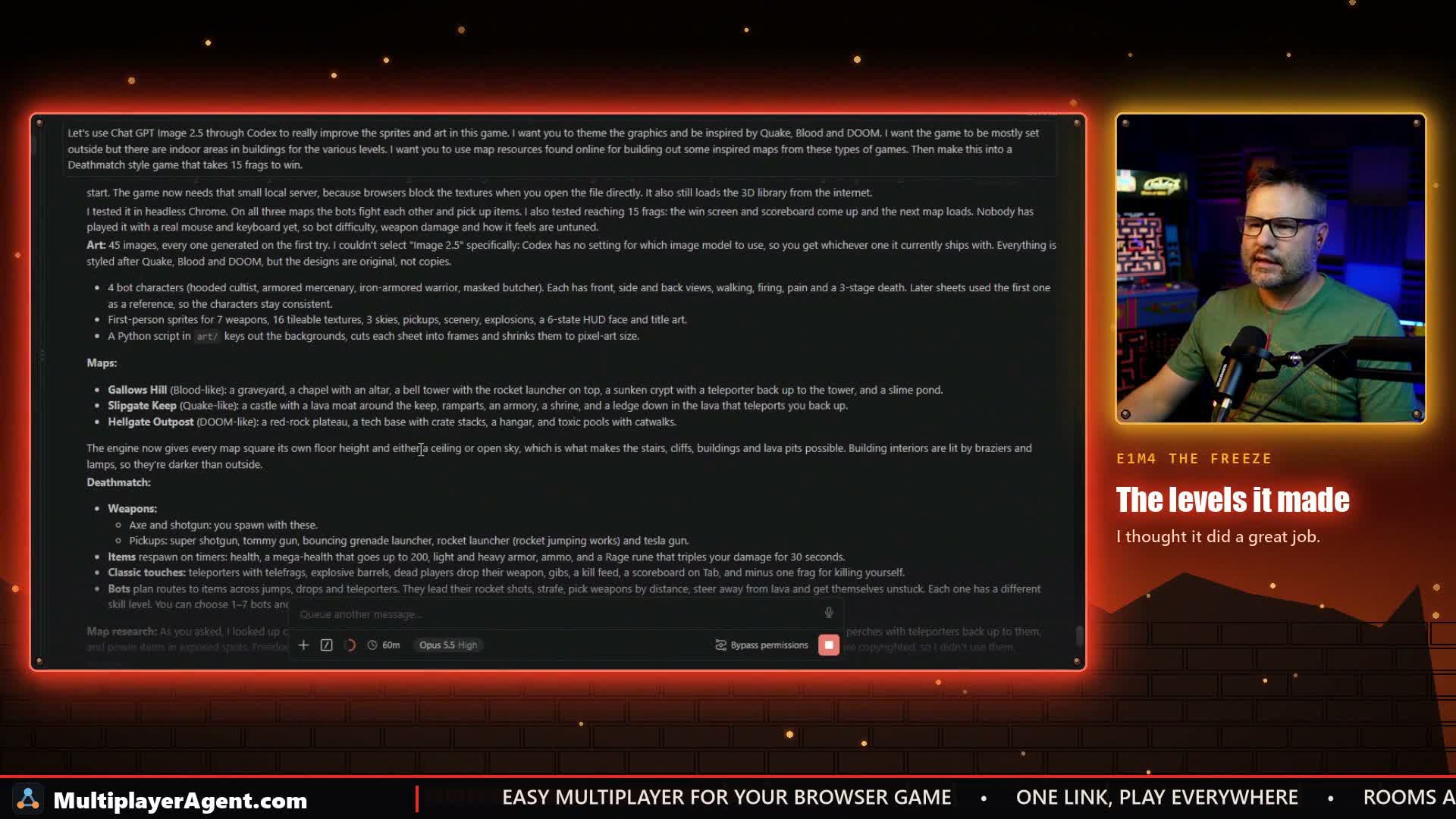
Use ChatGPT image generation through Codex to make the art better: inspired by Quake, Blood and Doom, mostly outside with some indoor areas and buildings for the levels, maps referenced from online. Make it a deathmatch, 15 frags to win.The prompt as Nate describes it in the video.
04Fix the freeze with a recording
After the first match the game froze when he tried to start a new one. He sent the bug in. The agent came back: it couldn't reproduce the freeze.
So Nate told it to check the recording of his gameplay and look toward the end. It did, and it found the freeze. Models can't watch video, but they can pull frames out of one along with the transcript, match the frames to what you were saying, and look at each one. Nate's advice: record yourself playing, and point the AI at it.
Then test it. He plays another map: a new weapon, the flak cannon, a portal, triple damage, and bots that smoke him, so difficulty goes on the list. One gun renders wrong. Then he clicks next map, and it restarts fine. The bug is fixed.
Screenshots work the same way. The statues kept tricking him into thinking they were enemies, so he grabbed a screenshot of one and gave it to the agent with one ask: remove those. A pause menu that gets in the way of a clean screen grab is one more thing to ask it to remove. Be specific, and show it what you mean.
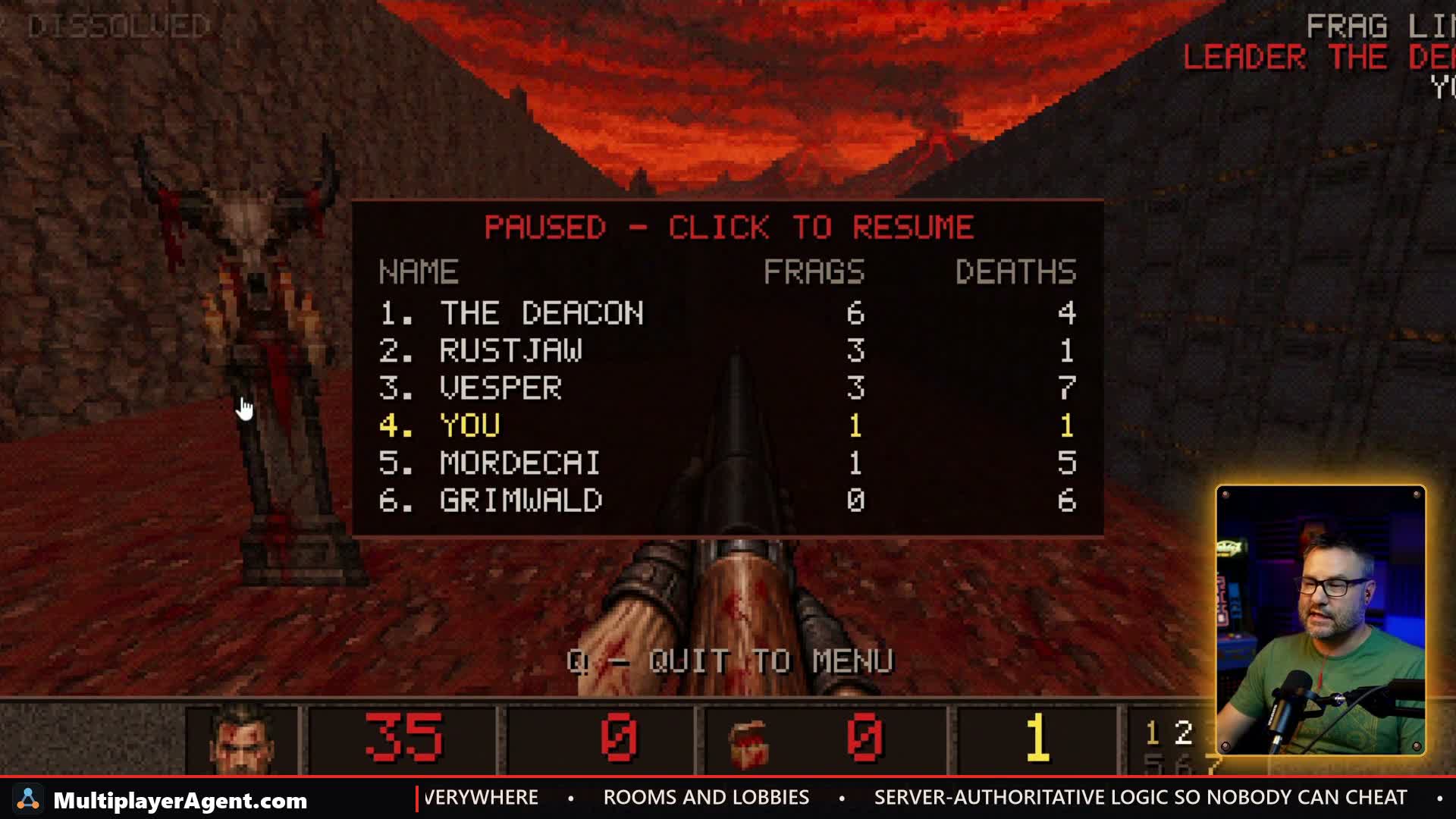
Check out the recording and look at it towards the end.What Nate told the agent when it couldn't reproduce the freeze, as he tells it in the video.
05Install the Multiplayer Agent plugin
A shooter you play alone against bots is a demo. One you can send to a friend is a game. Multiplayer Agent makes the game multiplayer and hosts it, from inside Claude Code, so you get a link to share instead of infrastructure to set up.
Two plugin commands do it. The first goes to Multiplayer Agent's GitHub for the skill that builds the multiplayer out. The second adds the MCP server, which connects Claude Code to Multiplayer Agent remotely with no account needed. Then reload plugins in the session, or start a new chat. You could do all of this by hand. The plugin is the shortcut.
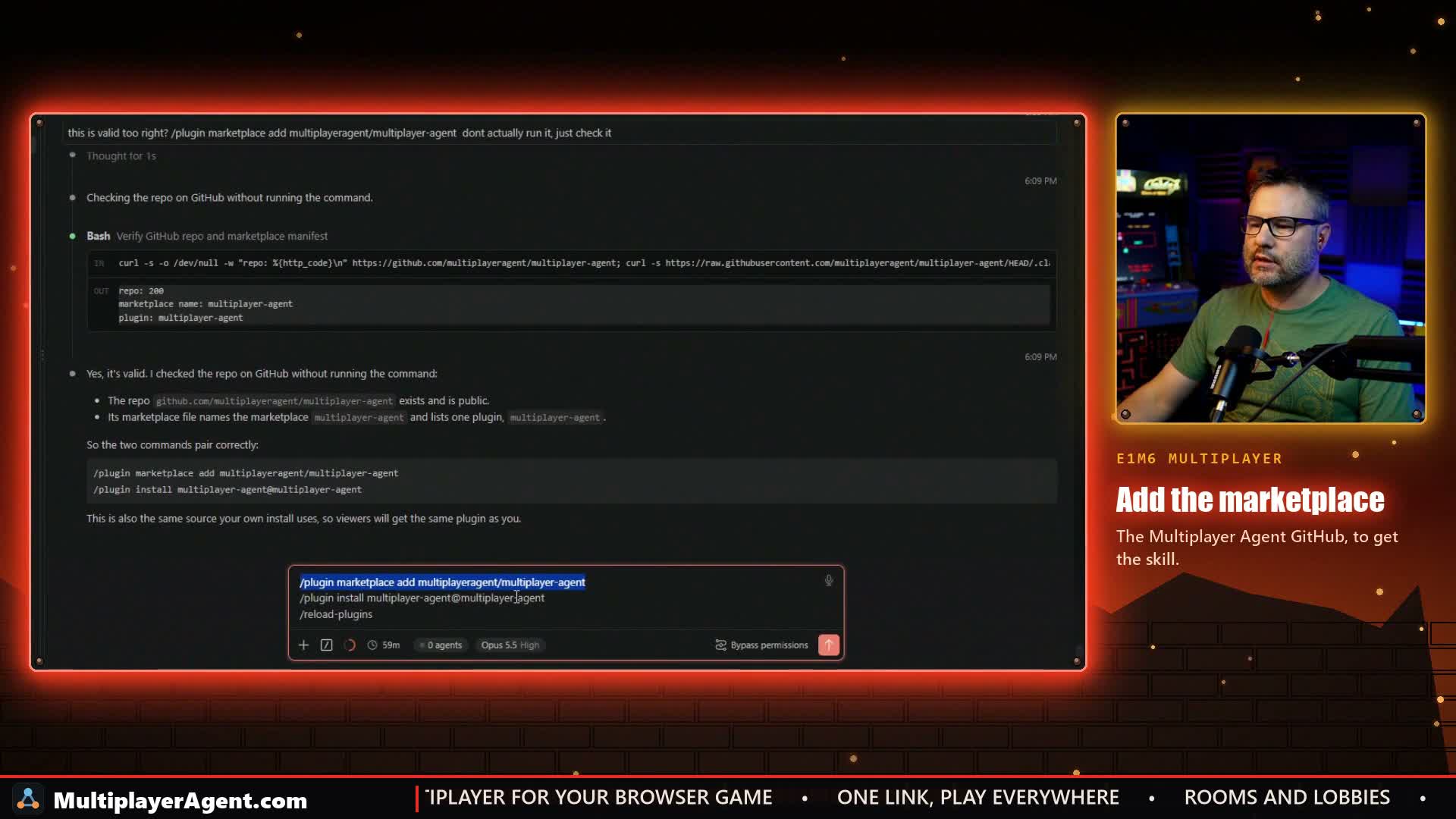
claude plugin marketplace add multiplayeragent/multiplayer-agent
claude plugin install multiplayer-agent@multiplayer-agent
The two commands, as Multiplayer Agent's plugin documents them.
06Make it multiplayer with one prompt
One prompt asks for the lot: make the game multiplayer, use Multiplayer Agent for it, and get it hosted. Bots fill the match until a human connects, then a bot gets kicked and the human takes its place. And make it server authoritative, so people can't cheat. That's a proper server client architecture, and a better experience for everyone.
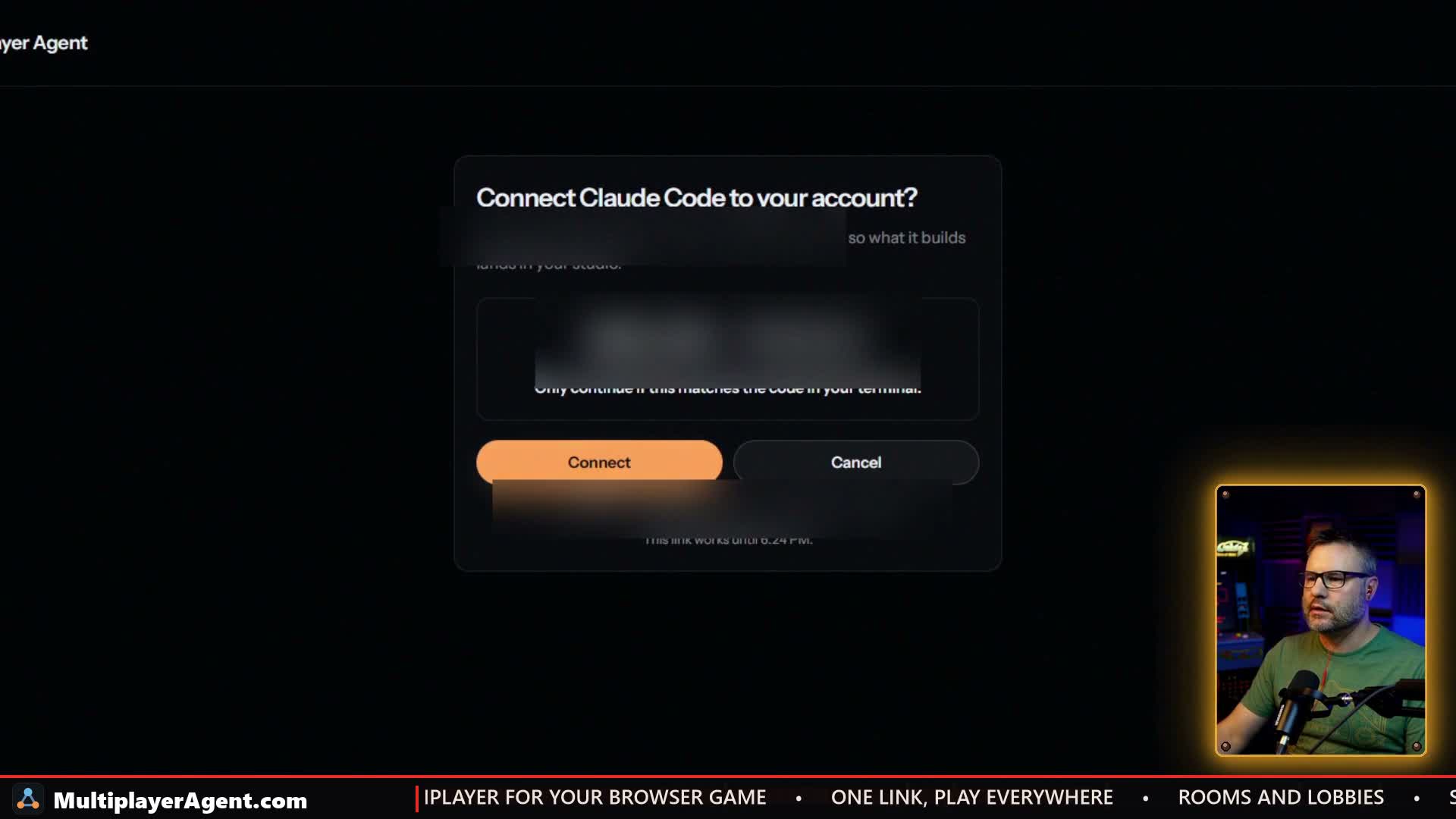
The agent then hands over a connection code for Nate's Multiplayer Agent account. He checks that it matches, hits Connect, and Claude Code is tied to his game, his studio and his account. Then it goes back to building.
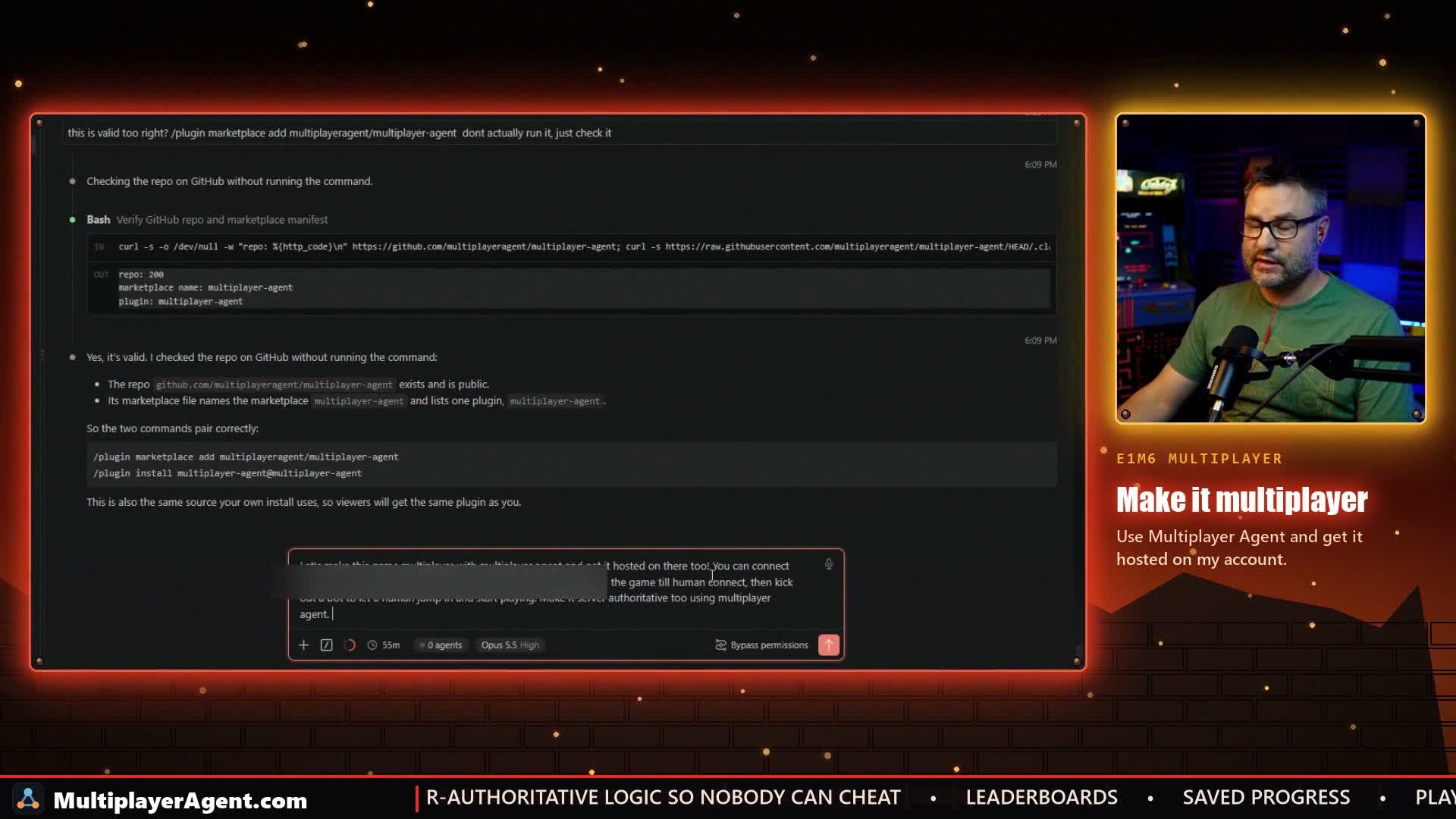
Make the game multiplayer, use Multiplayer Agent for it and get it hosted. Connect to my account. Keep bots in the match until a human connects, then kick a bot out and let the human play. Make it server authoritative so people can't cheat.The prompt as Nate describes it in the video.
07Tune the game while it builds
While the multiplayer build runs, Nate puts in a few more things: bullet traces, a difficulty setting for the bots, and a question about the electricity gun, since he couldn't tell whether it fires a bolt or a continuous beam. That question sent Claude Code through every weapon.
Difficulty changed everything. With the aimbot bots turned down the game is fun, and the bolt gun is fixed. He calls it a good boomer shooter, and counts five or six prompts to get here. He lost count.
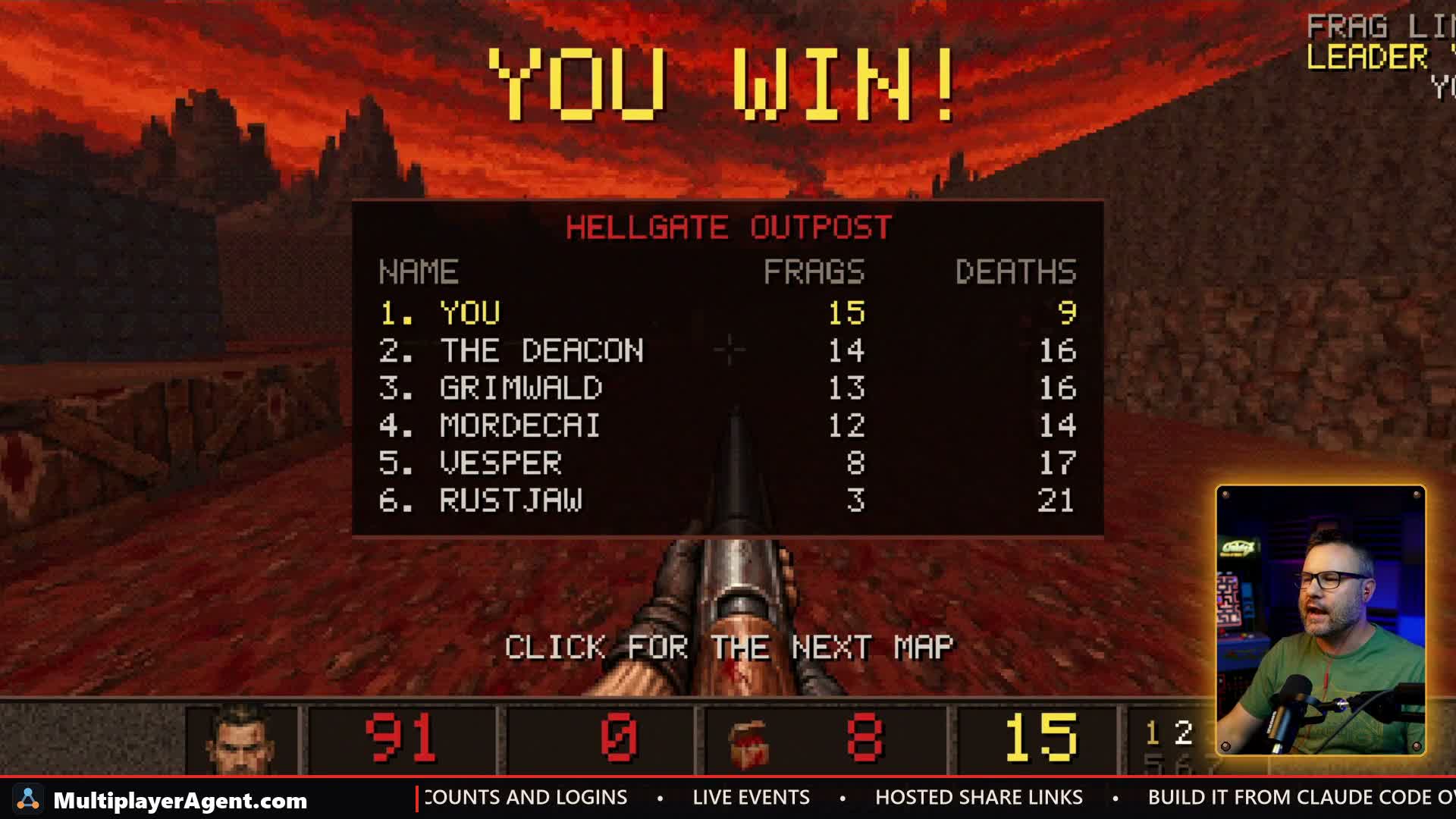
The match comes down to the wire. Armor is the pickup to go for, the electricity gun and the rocket launcher are the guns, and the leader hits 14 first. Nate takes it 15 to 14 with nine deaths, fewer than the bots had.
08What Multiplayer Agent built
Then Multiplayer Agent is done and the game is wired up. The change list is short and it's the whole backend. It's live at dreaddeathmatch.play.multiplayeragent.com, and Nate plays the hosted version right away. Still dying a lot: adjust the difficulty, or be better at it than he is.
- Server authoritative code: the server decides what happens, so a client can't cheat.
- Movement lag compensation.
- Bots get kicked when a new player comes in.
- A practice mode.
- A link anyone can open: dreaddeathmatch.play.multiplayeragent.com
09Get the code and make it your own
The whole game is free and public on GitHub at https://github.com/multiplayeragent/DreadFPS, and you can play it at dreaddeathmatch.play.multiplayeragent.com with no sign-in. Nate's terms: clone it, change it, steal it, make some money off it. Sounds great to him. The repo is also listed on the Resources tab at multiplayeragent.com.
From there it's the same loop as the video: play it, decide what you don't like, and ask for the change.
- Clone the repo and open the folder in Claude Code.
- Add the plugin with the two install commands above, then reload plugins or start a new chat.
- Ask for your change, run play.bat, and play it. Record it if something breaks, and hand the recording to the agent.
- Ask Claude Code to host it on Multiplayer Agent, and it hands you your own link.
Get the code
The whole game is on GitHub, free. Clone it, or have Claude Code remix it into your own copy with your own key.
Common questions
Do I need to know how to code?
Not to follow this build. Every change in the video is a prompt to Claude Code, or a screenshot or recording handed to it. Nate plays, decides what he doesn't like, and asks for the change.
How long does it take?
The first playable build took about 15 minutes from one sentence. The switch to sprites was the longest single change. Nate counts five or six prompts from the first sentence to a deathmatch he'd send to friends, and one more to make it multiplayer.
Where does the art come from?
ChatGPT image generation through Codex, on a paid ChatGPT plan. The art is original, inspired by Quake, Blood and Doom. The game doesn't take graphics or map files from those games, since they're copyrighted.
Can AI really watch my gameplay?
Not as video. It pulls frames out of the recording along with the transcript, matches each frame to what you were saying, and looks at the frames. That's how it found a freeze it couldn't reproduce on its own.
Can I play it with friends?
Yes. Send them dreaddeathmatch.play.multiplayeragent.com and you join the same deathmatch. Bots hold the seats until a human connects, then one steps aside. The server decides what happens in the match, so nobody can cheat.
Try it on your own game
The free tier does not expire and asks for no card. Add one script tag and have two people playing in about a minute.